
On 24 February, a webinar organized by AFI and the National Banking and Securities Commission of Mexico (CNBV) revealed how behavioral insight can serve to advance youth financial inclusion.
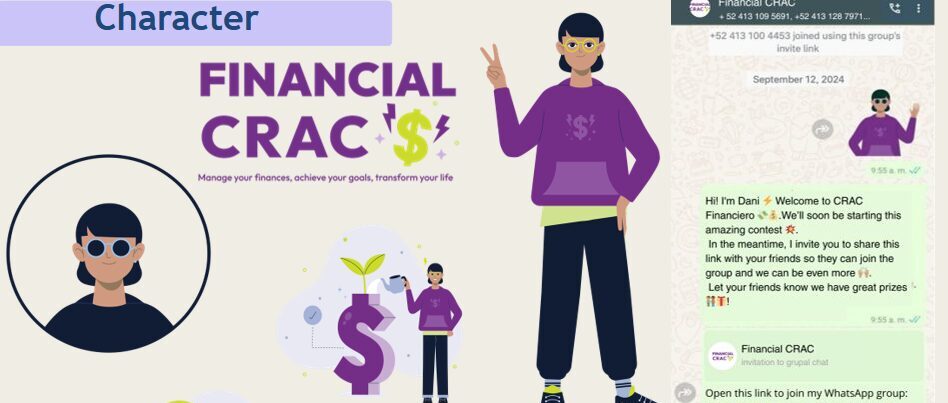
Findings from a research project designed by CNBV with support from AFI’s In-Country Implementation (ICI) program, reveal how behavioral economics and neuroscience can serve to promote financial inclusion and financial health for young people in rural and suburban areas of Mexico. By applying practical heuristics and simplified financial decision tools, the project achieved measurable behavior change, including a 20% increase in income tracking, and a 16% rise in trust toward financial cooperatives.
“To achieve real policy impact, we have to go beyond traditional financial literacy and explore how behavioral patterns, social norms, and psychological barriers influence financial decision-making,” said Zaira Badillo, Head of AFI’s Latin American and Caribbean Region.
“These findings highlight that many barriers to inclusion are behavioral rather than purely structural. A lack of trust in formal institutions, as well as deeply embedded gender expectations, are just of two many aspects that shape young people’s financial behavior.”
The resulting AFI publication, Changing Habits to Improve Lives: Lessons of a behavioral program to promote financial inclusion among young people in Mexico, offers practical insights for future youth-focused financial inclusion strategies, and can serve as a roadmap for countries seeking to integrate behavioral insights into National Financial Inclusion Strategies.
The webinar is available to watch below: