
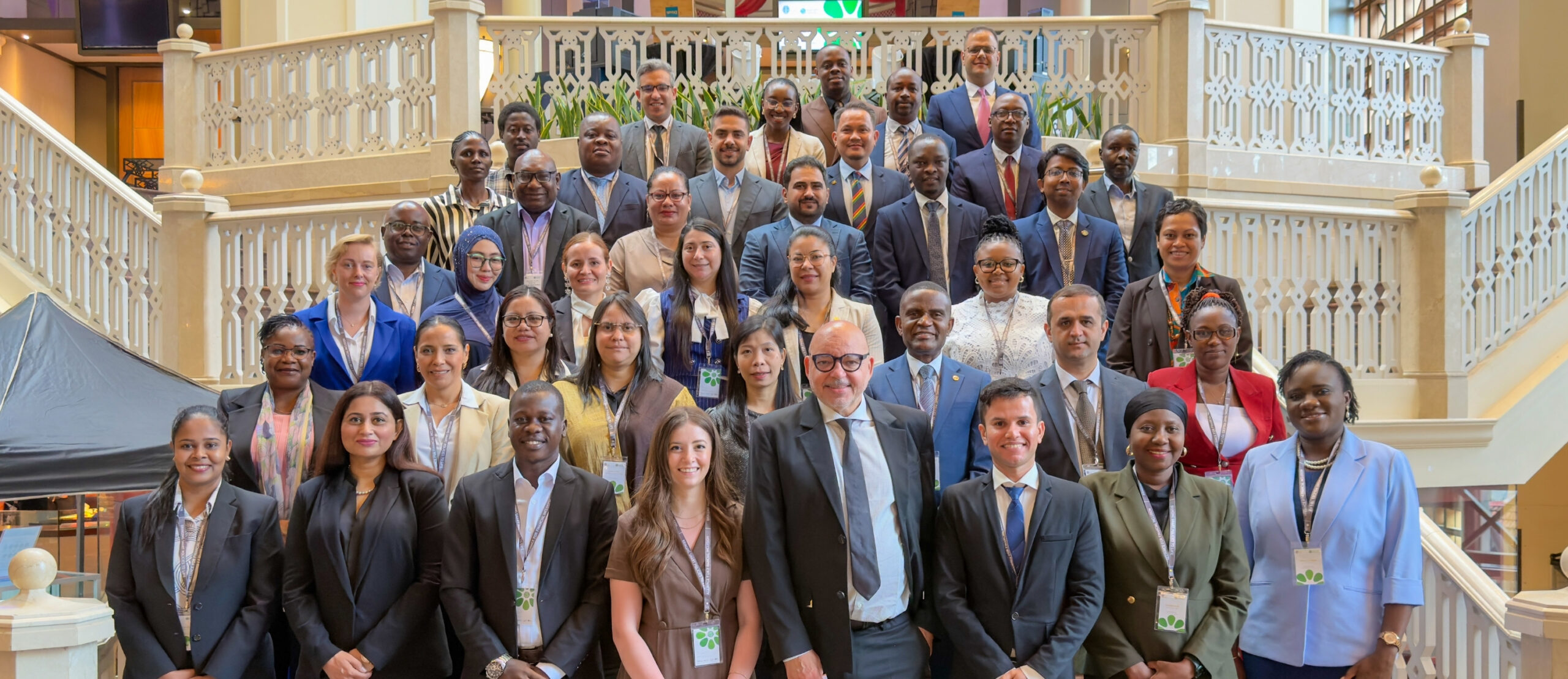
From 22 to 24 June, 38 experts from across the AFI network gathered in Kuala Lumpur, for a meeting of AFI’s Inclusive Green Finance (IGF) Working Group.
Discussions covered a wide range of topical issues, including measurement frameworks, climate risk supervision, sustainability disclosures, harmonization of green finance taxonomies, carbon market integrity, climate risk measurement, and sustainable housing finance.
“In many countries, climate events are impacting households, farmers, women entrepreneurs, small businesses and coastal communities,” said AFI Chief Executive Officer, Dr Alfred Hannig. “Our challenge is to move from IGF commitment to results, ensuring that climate finance reaches those who need it most, that MSMEs are supported in their green transition, that vulnerable groups are not left behind, and that financial systems become more resilient to the shocks unfolding all around us.”
“Climate change, environmental degradation and financial inclusion are no longer parallel policy agendas—they have become inseparable pillars of financial sector resilience,” said IGF Working Group Co-Chair, Cyril Benoiton from Central Bank of Seychelles. “As regulators, our responsibility is not simply to respond to climate risks, but to shape financial systems capable of supporting an inclusive and orderly transition toward sustainable development.”
During the meeting, members launched three new technical subgroups focused on Climate-Related Disclosures, Green Finance Taxonomy Harmonization, and Managing Climate Exposures through Prudential Tools. Attendees also discussed Malaysia’s experience in building an integrated sustainable finance ecosystem, where regulators, financial institutions, capital markets, and the private sector are working collectively to accelerate the green transition.
“The true value of this meeting will derive from our collective ability to convert knowledge into implementation,” said Cyril Benoiton. “Every framework adopted, every supervisory practice strengthened, and every policy translated into action brings us closer to building financial systems that are both climate resilient and financially inclusive.”