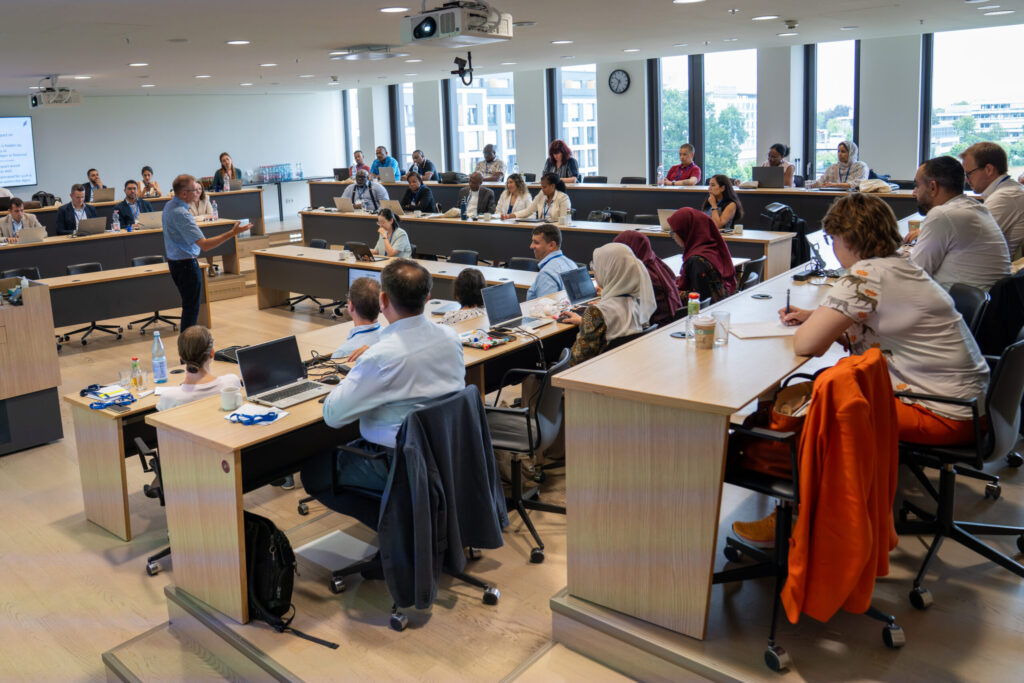

From 29 June to 3 July 2026, participants from 20 countries attended the Frankfurt School Summer Academy 2026. An AFI-led Central Banking track explored how policy frameworks can advance financial inclusion and financial capability through consumer education, inclusive green finance, MSME finance, and digital financial services.
Addressing the opening session, Fatma Dirkes, Head of International Advisory Services at Frankfurt School of Finance & Management, highlighted the decade-long collaboration between AFI and the Frankfurt School.
The Central Banking sessions, led by experts from AFI, the Frankfurt School, Deutsche Bundesbank, EIOPA, Reserve Bank of Malawi and JoPACC, explored topics including macroeconomic resilience, climate risk and stress testing, digital asset regulation and SupTech, behavioral-led financial education, and MSME green transition strategies. A field visit to Deutsche Bundesbank introduced participants to the bank’s structure, role in safeguarding stability, and working relationship with the European Central Bank.
“As financial systems become increasingly digital, the role of central banks and regulators in promoting financial inclusion, consumer protection, and resilience is more critical than ever,” said AFI Head of Capacity Building, Madhurantika Moulick. “Through the Summer Academy, we are equipping participants to navigate a complex risk environment and to shape inclusive, resilient, and digitally empowered financial systems.”
AFI and the Frankfurt School co-deliver the Certified Expert in Financial Inclusion Policy (CEFI) program, a six-month, online program designed to develop participants’ ability to draft and analyze financial inclusion policies and strategies. Details about the course and how to register are available on the AFI website.