
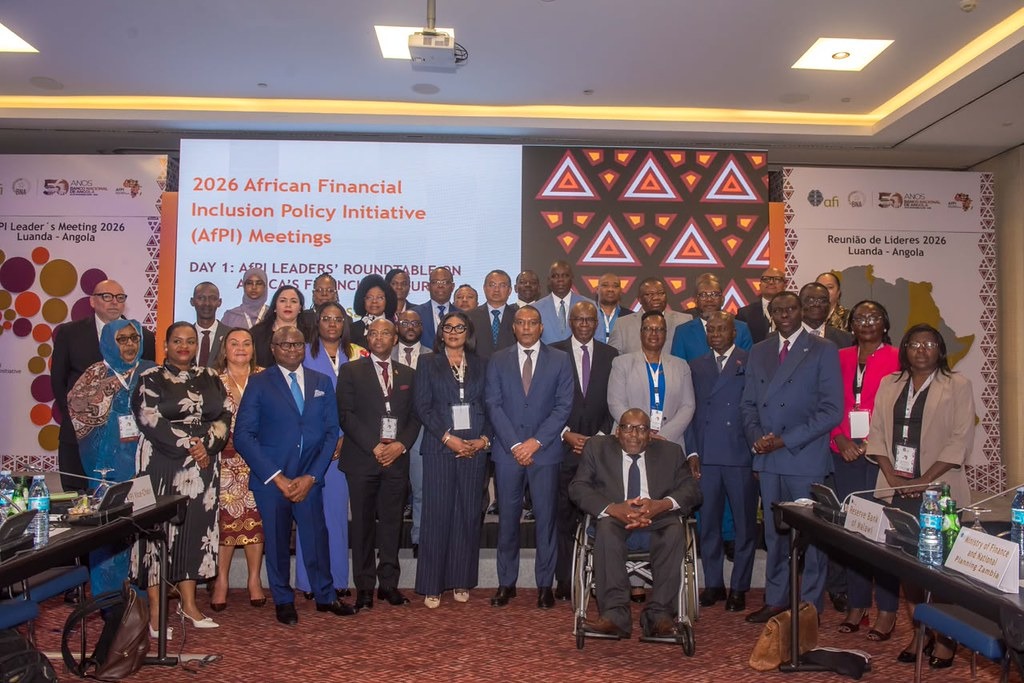
We, African Leaders at the Alliance for Financial Inclusion (AFI) African Financial Inclusion Policy Initiative (AfPI) Leaders’ Meeting, convened in Luanda, Angola, from 9–10 July 2026, affirm our commitment to building inclusive, resilient, and sustainable financial systems that support long-term economic transformation.
Over the last decade, Africa has made significant progress in expanding access to formal financial services through sustained policy reforms, regulatory innovation, reshaping financial systems and broadening economic participation across the continent.
As we reflect on this journey;
We assert that financial inclusion must enter a new phase. Having expanded access to financial services, we must focus on meaningful usage, improved financial health, stronger resilience, better livelihoods, and inclusive economic growth. We must ensure that participation in the formal financial system creates empowerment for individuals, households, farmers, women, entrepreneurs, young people, and vulnerable groups.
We affirm that in an environment characterized by geopolitical uncertainty, climate-related shocks, fiscal pressures, shifting trade dynamics, rapid technological change, and macroeconomic volatility, financial inclusion represents a vital instrument for strengthening economic resilience, enhancing productivity, and advancing inclusive and sustainable development.
We recognize that the continued expansion of digital financial services must be underpinned by strong cybersecurity measures, in order to maintain trusted, stable and resilient financial ecosystems.
To advance the next phase of progress, we commit to:
1. Developing financial inclusion policies which improve financial well-being and which support economic resilience, financial stability, sustainable development, and inclusive growth.
2. Ensuring that financial systems and government authorities support productive sectors of the economy, particularly agriculture and small business, given their central role in job creation, food security, economic diversification, and long-term growth.
3. Building the resilience, trust, and integrity of digital financial ecosystems by strengthening regulatory coordination, institutional capacity, incident reporting, and public-private collaboration, and by developing AFI’s African Cybersecurity Intelligence Sharing platform.
4. Promoting evidence-based policymaking and impact measurement through strengthened data use and data sharing.
5. Strengthening the sustainability of AFI, in order to deepen regional cooperation and peer learning, and to accelerate policy innovation and our collective capacity to respond to emerging risks and opportunities.
6. Building strong partnerships among like-minded entities – policymakers, financial institutions, development partners, the private sector, and other stakeholders – to advance financial inclusion.
Through this Communiqué, we assert that the success of financial inclusion policies must not be measured by access parameters alone, but by their tangible contribution to inclusive development. Herewith, we affirm our collective resolve to advance financial inclusion as a strategic driver of economic resilience, financial stability, and shared prosperity across Africa.