
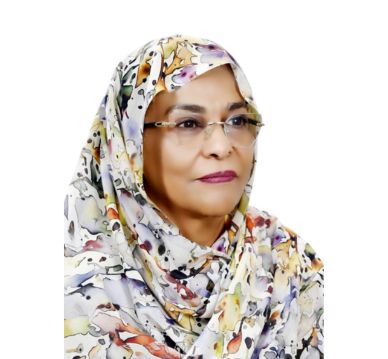
Amna Mirghani Hassan El-Toum
Governor, Central Bank of Sudan
Today, following years of conflict and economic instability, most Sudanese adults remain unbanked, lacking access to formal banking services. A reliance on cash, informal saving groups and unregulated lenders creates inefficiencies, limits economic growth, and weakens our ability to manage the economy.
That’s why financial inclusion is such a priority for the Central Bank of Sudan (CBOS). If we can ensure individuals and business have access to useful and affordable financial services, we can improve monetary stability, support a more stable financial sector, and support inclusive economic growth.
Digital technologies are driving inclusion
In recent years, the rapid growth in digital financial services and mobile money is reducing the need for physical bank branches, and bringing financial services to rural and low-income areas.
Digital technology represents a great way to reach people who are currently excluded from formal banking, including those living in conflict zones. We have implemented a number of policy actions in this respect, expanding access through simple mobile technology and agent banking, building a broader digital payments ecosystem, digitizing government payments, and targeting the informal and cash-based economy.
We’re placing an emphasis on digital financial literacy. Through education, we can empower customers, build trust in digital systems, and protect people from fraud.
The importance of green and gender-inclusive finance
The Central Bank of Sudan is actively encouraging service providers to extend credit to women, youth, and people with disabilities. A number of initiatives are under way to improve women’s financial inclusion. These are mostly led by international organizations, NGOs, and community-based programs, rather than large-scale government systems.
Another priority for CBOS involves Inclusive Green Finance (IGF), which builds resilience among vulnerable groups through access to savings, credit, insurance, and payment systems. We see IGF as a way to support economic recovery, financial stability, climate resilience, and other critical national challenges. In this respect, the Central Bank has issued a green finance regulation, and directed financial services providers to define strategies for green finance.
Giving more prominence to financial inclusion
Recently, the Central Bank of Sudan upgraded its General Directorate for Financial Inclusion, a reflection of the importance we place on this area. The General Directorate has a wide-ranging mandate, encompassing:
- Enhancing financial stability and economic growth through financial inclusion of unbanked and excluded segments
- Supporting Micro, Small, Medium Enterprises (MSME) finance to enable economic growth
- Developing a consumer protection framework
- Encouraging innovation and digital transformation
- Leading and coordinating national efforts in financial inclusion
- Formulating a National Financial Inclusion Strategy (NFIS)
- Formulating policies and regulations that enhance financial inclusion
- Communicating with regional and international organizations
There is a lot to do, but our commitment is firms strong. While today, Sudan’s financial inclusion rate remains low, we now have a structure that will allow us to plan, design and implement financial inclusion policies which strengthen stability, create opportunities, and build resilience, throughout the nation, “Towards a stable, inclusive, and digital monetary and financial system that contributes to the reconstruction of the national economy and the attainment of sustainable development.”