

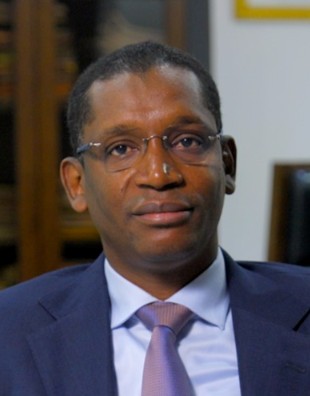
Bamba Ka, Director General, Financial Sector, Ministry of Finance and Budget of Senegal
Back in 2014, only 15% of adults in Senegal had a formal bank account; today, that figure stands at 76% (World Bank Global Findex 2025). But this rapid and significant increase, largely driven by the spread of mobile money, only reveals part of the picture. Major challenges in financial inclusion remain, particularly where women are concerned.
Walking through any Senegalese market, you will see that women are the entrepreneurial heart of our nation. Active across all economic sectors, and operating mainly in informal contexts, they support families and communities. The guardians of our traditions, they are also incredibly resilient.
Women are natural money managers. One rural woman who we interviewed recently summed it up: “When we have fifty francs, we spend five and save forty-five.”
For many women entrepreneurs, however, their ability to grow their businesses, create jobs, and contribute to the economy is being constrained. A 6% gender gap in financial inclusion remains between men and women. Only 20% of women are accessing loans from formal financial institutions, largely due to the difficulties they face in providing collateral.
How can financial inclusion help women entrepreneurs?
Women’s financial inclusion and economic empowerment are interdependent, and both make important contributions to development. That’s why, through the National Financial Inclusion Strategy 2022–2026, we have set the goal of reaching 90% financial inclusion for small businesses, with a focus on women and youth, particularly in rural areas.
The strategy sits on four pillars:
- Financial education
- Providing tailored financial products
- Digitalizing payments
- Adapting the regulatory framework
Over the last few years, we have made solid progress in digitalizing payments, adapting the regulatory framework through a new banking law and microfinance regulations, and tailoring products by introducing solutions suited to different segments of the population.
We’re helping women-owned businesses to access financial services through initiatives such as the Investment Guarantee Fund (FONGIP) and the National Bank for Economic Development (BNDE). The Kuwait Fund for the Promotion of Food Security is supporting women in the agri-food sector, helping them to obtain small loans from local financial institutions to start or expand businesses in agriculture, livestock, and dairy production.
The crucial importance of financial education
Financial education was identified in the National Financial Inclusion Strategy as the most significant challenge to address.
We’re working to shift informal savings into formal channels, where money can support inclusive economic growth for the benefit of women, youth, and the population as a whole. Multiple national stakeholders contribute to this effort, including the Financial Services Quality Observatory, the Directorate General of the Financial Sector within the Ministry of Finance and Budget, and community institutions.
We want to avoid a situation where people enter the formal financial sector only to leave it later, due to a lack of understanding of financial services, or because they do not perceive tangible benefits.
With that in mind, we’ve developed a National Financial Education Program which aims to help all segments of the population—especially women and youth—understand the financial system and use financial services to create wealth. In particular, it seeks to strengthen women’s capacities, enabling them to plan and manage their resources effectively, improve their creditworthiness, and adopt responsible financial behavior.
Financial inclusion is key to national transformation
We view financial inclusion as a major lever to achieving sustainable and inclusive development that meets the needs of the entire population. In Senegal, a number of programs focused on social inclusion, territorial equity, and community development are being implemented under the Senegal 2050 Vision, as outlined in the National Development Strategy 2025–2029.
Among them, financial inclusion plays a decisive role. Expanding women’s access to financial services, financial education, and financing mechanisms, as well as strengthening their capacities and confidence, is essential to fostering the emergence of sustainable businesses and supporting truly inclusive economic growth—and to creating a society where every girl and woman can realize her potential.
We’re proud of what we’ve achieved over the last decade, but there is much still to do. Overcoming the remaining challenges will require continued, concerted effort from all of us.