
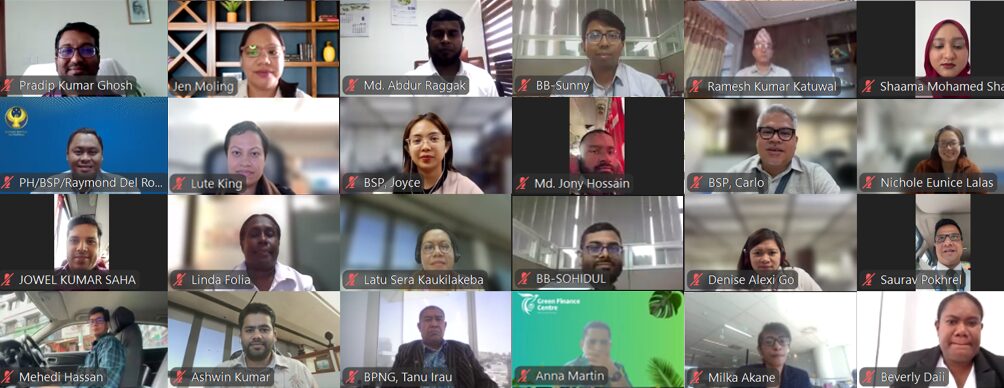
On 28 and 29 July, AFI brought Asian and Pacific members together for a training event on Inclusive Green Finance (IGF) policy implementation and roadmap development.
The event, organized by AFI’s Capacity Building unit, was designed to help participants to operationalize IGF, integrate environmental risks into financial supervision, develop robust data collection and taxonomy frameworks, and design frameworks that support financial incentives, mandatory regulations, and sustainable MSME lending. The aim was to translate high-level principles into actionable, institution-specific action plans.
Opening the event, Dr Biswo Nath Poudel, the Governor of Nepal Rastra Bank and Chair of AFI’s South Asia Region Financial Inclusion Initiative, highlighted that “climate change has become a significant challenge for financial stability, development, and financial inclusion. This requires collective action, innovative policy responses, and strong institutional collaboration. IGF recognizes that climate action and financial inclusion must advance together – AFI member institutions have pledged to work together and with partners in developing and implementing financial inclusion policies that deliver positive environmental outcomes for climate-vulnerable populations.”
During the two days, speakers from Nepal Rastra Bank, Reserve Bank of Fiji, Bank of Papua New Guinea, State Bank of Pakistan, Maldives Monetary Authority, Bangladesh Bank and Bangko Sentral ng Pilipinas shared experiences and lessons from their respective jurisdictions.
Concluding the session, AFI’s Head of Capacity Building, Madhurantika Moulick, noted that “over the past few years, the AFI network has moved from discussing why inclusive finance matters, to focusing on how we can implement IGF policies. This training has made clear that successful implementation requires policies that are practical, collaborative, and are adapted to the national realities. And while climate risks may differ across the regions, the value of peer learning and collaboration among AFI member institutions is evident.”