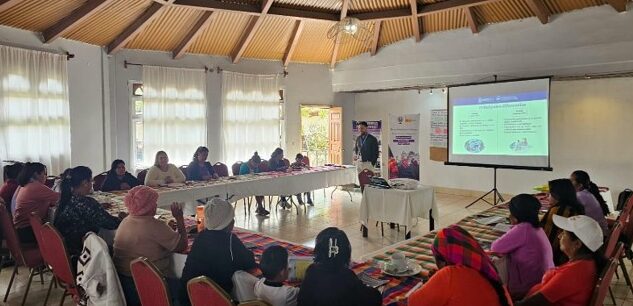
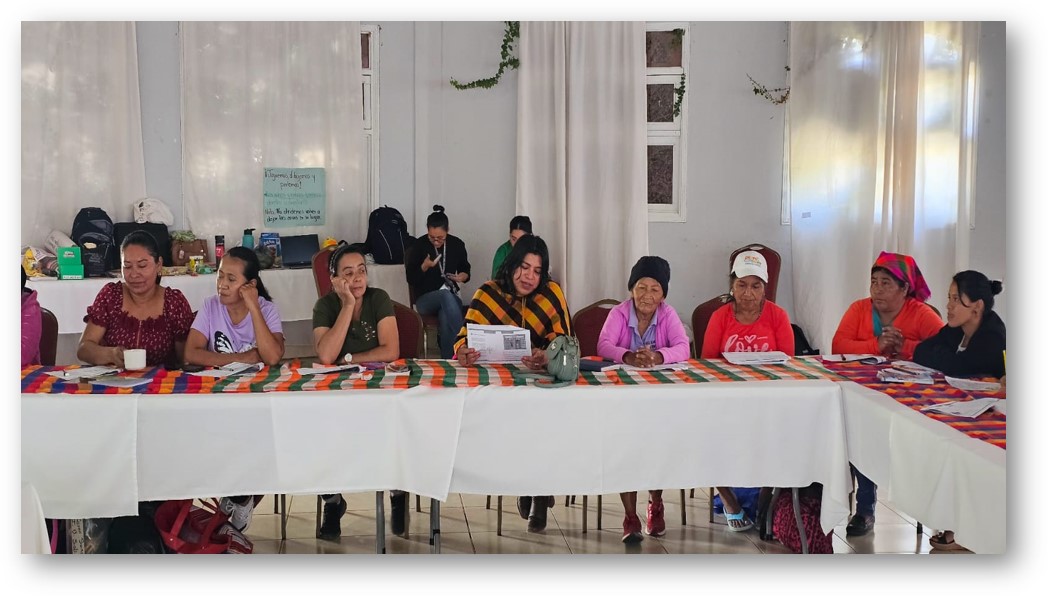
In Honduras, women’s economic decisions are closely linked to caregiving responsibilities, household management, income generation, and time allocation. As part of its work to advance equitable financial inclusion, the National Commission of Banks and Insurance (CNBS) has developed an innovative initiative targeting women from the Lenca ethnic group, incorporating the care economy as a central pillar of a strategy designed to respond to their social, economic, and cultural realities.
The CNBS sees financial education as playing a key role in strengthening capabilities, creating opportunities, and improving economic well-being, particularly for women, who often face greater barriers to accessing financial resources, information, products, and services. From this perspective, CNBS has developed a comprehensive and holistic training model for Lenca women, integrating financial education, household finances, productive activities, and the care economy.
Through four interconnected modules, the training links financial education, household financial management, entrepreneurship, and the care economy. Beyond strengthening financial knowledge, the strategy aims to promote a broader understanding of the relationship between family well-being, economic autonomy, and the value of care work.
This approach recognizes that financial decisions are not made in isolation. On the contrary, they are closely related to time allocation, family responsibilities, productive activities, and caregiving tasks, which often fall disproportionately on women.
The methodology enables participants to strengthen their skills in resource management, financial planning, household budgeting, and income and expense management, while also recognizing the value of their work and understanding how caregiving responsibilities influence their economic opportunities. In this way, financial education moves beyond being solely about money and becomes a practical tool for well-being, economic autonomy, and personal development.
The Care Economy as a Driver of Financial Inclusion
One of the most innovative aspects of the initiative involves recognizing care as a determining factor in women’s financial inclusion. In Lenca communities, many women devote a significant portion of their time to caring for children, older family members, and performing other household responsibilities that are essential for family well-being. Although these activities are fundamental to sustaining both the economy and community life, they often limit women’s participation in training opportunities and economic development initiatives.
The CNBS program highlights the economic and social value of unpaid care work, and its contribution to family well-being, community functioning, and economic sustainability.
Designing Training Around Women’s Time
A key feature of the initiative involves adaptating the training methodology to the actual circumstances of participants. Recognizing that one of the main barriers preventing women from attending training activities is childcare responsibility, the CNBS incorporates childcare and child support spaces during workshops and training sessions. This enables women to participate actively in learning activities without having to choose between their education and their family responsibilities.
At the same time, children participate in educational activities delivered through the “Learning Through Play” methodology, strengthening their knowledge of saving, planning, and responsible resource management. As a result, the intervention extends the benefits of financial education beyond direct participants, promoting intergenerational learning within households.
Lessons for Financial Inclusion Policies
The CNBS experience demonstrates that financial education programs can achieve more effective outcomes when they incorporate a comprehensive understanding of the realities faced by women. The main lesson learned is that financial inclusion does not depend solely on access to knowledge or financial products. It also requires recognizing the conditions that determine women’s ability to participate, learn, and take advantage of available economic opportunities. Caregiving responsibilities, time allocation, family obligations, community dynamics, and territorial conditions all directly influence this process.
In rural and Indigenous communities, geographic distance, transportation limitations, infrastructure challenges, and the multiple responsibilities carried by women should not become barriers to accessing training opportunities. For this reason, the intervention has been designed around local dynamics and the needs expressed by the participants themselves, creating a training process built from within the communities rather than for the communities. This approach has enabled the development of content, methodologies, and support mechanisms that are relevant, accessible, and aligned with the realities of Lenca women.
Another key factor behind the initiative’s success has been the establishment of strategic partnerships with local stakeholders, particularly municipalities through Municipal Women’s Offices, as well as civil society organizations, community leaders, and grassroots organizations. These partnerships have strengthened outreach efforts, increased participants’ trust and engagement, enhanced the territorial relevance of activities, and contributed to the sustainability of the program by creating a support network that encourages women’s active participation and amplifies its impact.
By integrating financial education with the care economy and designing concrete mechanisms to facilitate women’s participation, we simultaneously strengthen financial capabilities, promote women’s economic autonomy, and support the inclusion of traditionally excluded Indigenous communities.
This experience demonstrates that when policies recognize women’s everyday realities, value care work, and are built in collaboration with local stakeholders and communities themselves, outcomes become more sustainable, inclusive, and transformative. In this way, the care economy becomes a practical tool for expanding the reach and effectiveness of financial inclusion.