
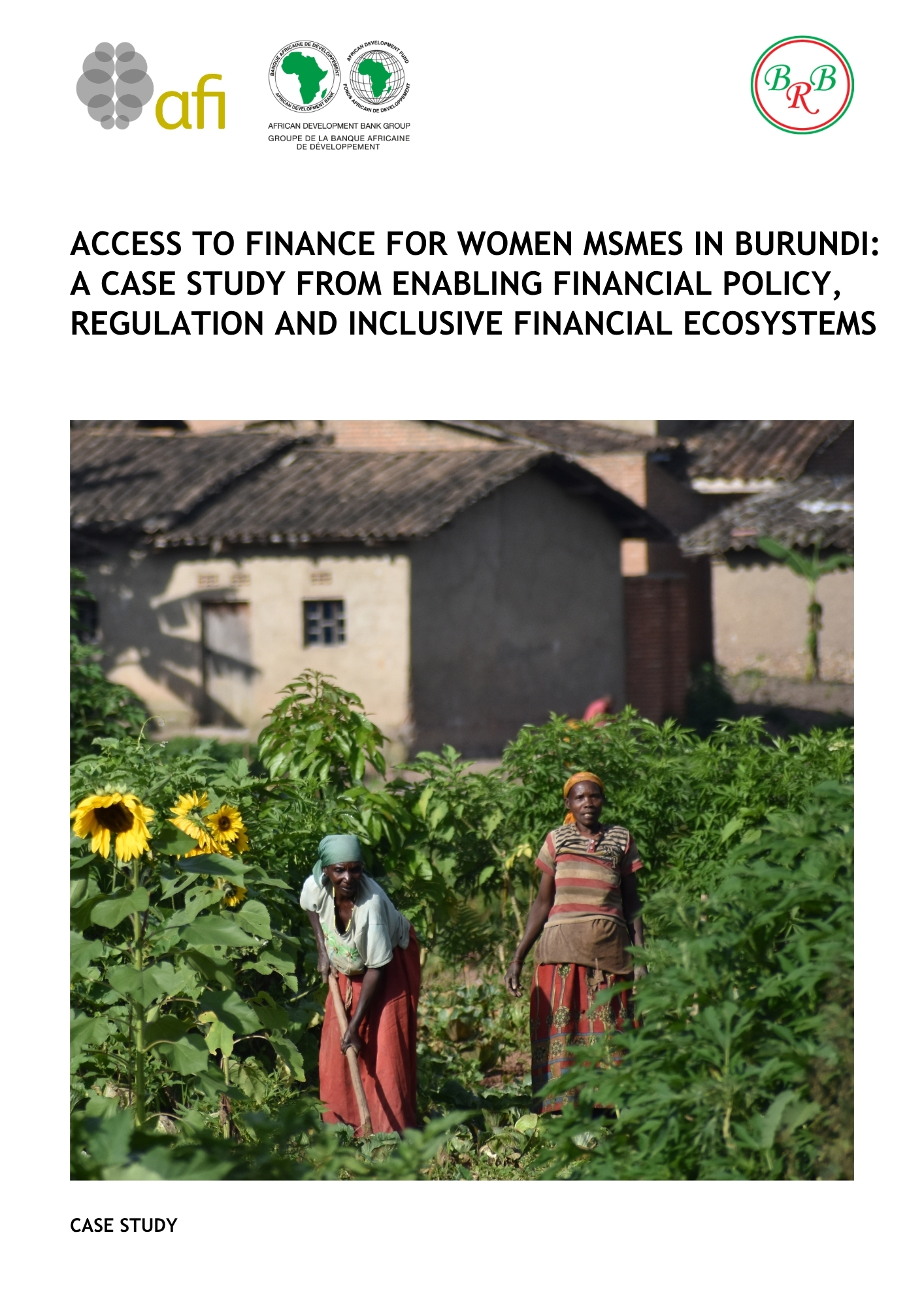
This case study explores how Burundi is strengthening financial inclusion for women-owned and women-led MSMEs through gender-responsive policies, regulatory reforms and a more inclusive financial ecosystem.
It examines the structural barriers facing women entrepreneurs, including informality, limited access to productive finance, unequal asset ownership and digital and financial literacy gaps, while highlighting the role of mobile money, dedicated financing mechanisms and solidarity-based lending in expanding financial access. The study also presents practical recommendations to strengthen gender-responsive financial systems, enabling women-led enterprises to formalize, grow and contribute more effectively to Burundi’s inclusive economic development.