
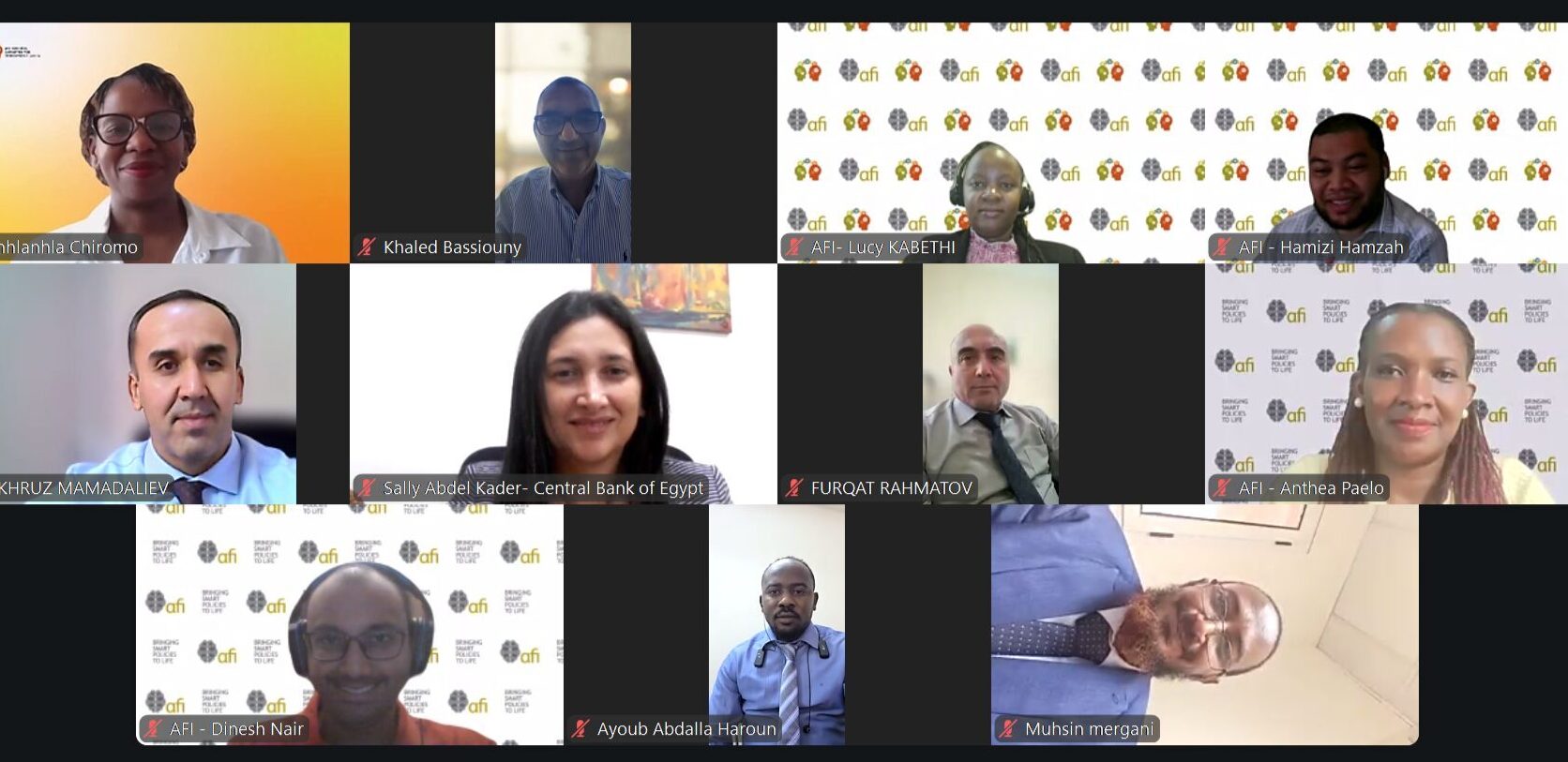
This week, AFI’s Arab Region Financial Inclusion Policy Initiative (ARFIPI) members took part in a two-day virtual training on countering financial fraud.
The program explored how financial literacy, consumer empowerment, and supervisory technologies could strengthen consumer resilience against fraudulent activity in the region. 12 out of 14 participants identified a lack of financial literacy and digital skills as the main cause of recurring digital fraud.
“As digital payments, e-wallets, and digital credit continue to expand, access to financial services is becoming easier,” said Khaled Bassiouny, Central Bank of Egypt’s General Manager of Financial Inclusion and ARFIPI Chair for the Expert Group on Financial Inclusion Policy. “But access without safety can put consumers at risk.”
“We must equip consumers with the knowledge and skills to recognize fraud, or risk negative experiences hampering their trust in the formal financial system.”
The training formed part of the 2025-2027 ARFIPI Workplan, which supports members as they respond to the region’s rapidly changing digital landscape.
Through peer learning and interactive planning exercises, participants drew from key AFI knowledge products, including the Consumer Empowerment & Market Conduct (CEMC) Policy Model, the Policy Model on Consumer Protection for Digital Financial Services (DFS), and the Digital Financial Literacy Toolkit.
“These are essential tools to protect consumers and ensure that financial inclusion translates into meaningful, safe, and sustainable use,” added Bassiouny.