

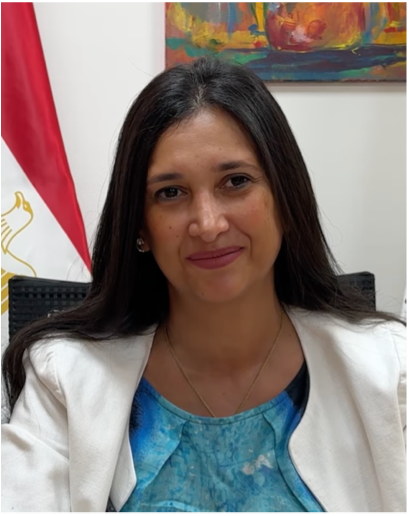
Sally Abdel Kader, General Manager, Financial Literacy Department, Central Bank of Egypt
Nearly 80% of Egyptian adults have an account, but how many use financial services confidently, protect themselves from scams, and build savings for the future? Real financial health requires more than just access; it hinges on financial education. At the Central Bank of Egypt, our goal is to ensure that financial literacy helps translate access into real-life impact.
Financial health is about using financial services confidently, responsibly, and safely. This requires customers to be aware of the benefits, risks, and variety of services available to them, enabling them to make informed financial decisions.
To identify the gaps and challenges to financial education, we recently launched the country’s first financial literacy demand-side survey. In parallel, we’re also putting a three-part framework into action. Education has to reach the people who use financial services, the providers who sell them, and the policymakers who shape the rules. If any one of them is missing, the others can’t succeed.
Equipping communities
Launched in 2024, our National Financial Literacy Campaign helps explain complex financial concepts like inflation, boost consumer protection, support responsible financial decision-making, and build confidence in the formal financial system.
Through our Village Savings and Loan Associations program, we train women entrepreneurs in financial literacy, digital skills, and business management, helping them move into the formal financial system.
The School Bank initiative, run in partnership with the Ministry of Education, provides students with 15 hours of hands-on lessons each year on saving and money management, built right into the curriculum.
On Arab Financial Inclusion Day, the CBE runs outreach programs aimed at expanding financial education to vulnerable communities, including rural communities, women, small businesses, and youth.
Building service provider capacity
Banks are often a customer’s first and only source of financial guidance, so they have a role to play. Under CBE directives, commercial banks must run their own financial literacy and consumer awareness programs and train banking staff in consumer-centric design, responsible product pitching, and fraud detection.
Banks are held to account too. Each must submit a measurable annual financial literacy action plan and file quarterly implementation reports to the CBEs financial inclusion unit.
Preparing regulators and stakeholders
The CBE takes part in the Financial Literacy and Policy for Financial Inclusion program at Tufts University, where CBE staff and national stakeholders train together on advancing financial literacy and inclusion goals.
We also host AFI-facilitated peer learning exchanges with regional policymakers to share our experience in implementing effective financial literacy and women’s economic empowerment strategies.
What comes next?
Lasting change needs nationwide buy-in, which is why we’re working with local stakeholders to create a unified competencies framework for financial literacy. This will help us better understand different segments’ financial literacy needs and the best ways to reach them.
At the CBE we don’t want the work of financially including over 56 million people to go to waste. If policymakers, banks, and stakeholders all commit to the cause, we can provide our communities with solid, sustainable financial education resources to help them translate access into impact.