
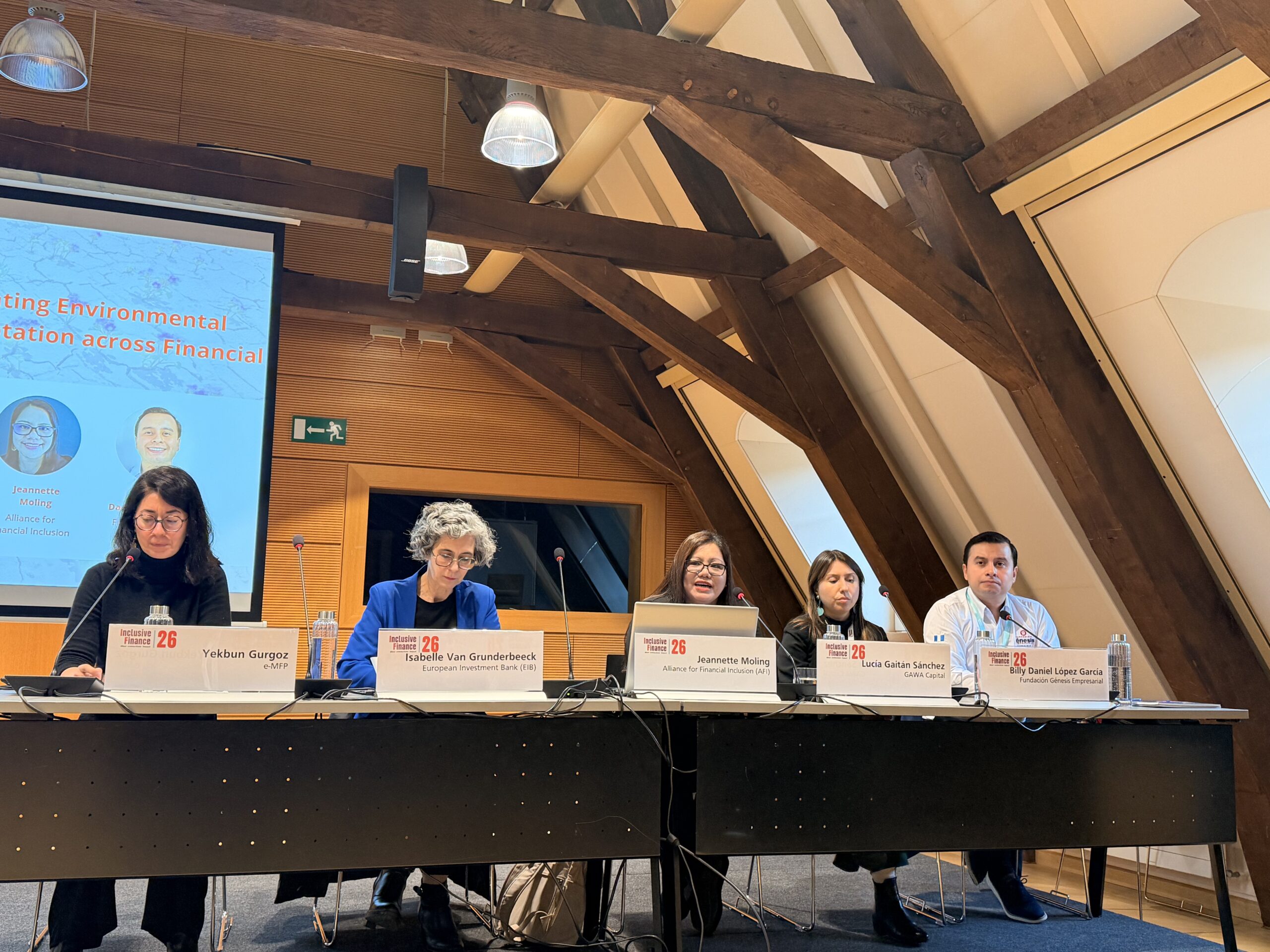
This week, AFI joined a panel on embedding environmental sustainability across financial institutions at the European Microfinance Platform’s Inclusive Finance 26 (IF26) event, held in Luxembourg from 11 to 13 November.
The discussion focused on moving beyond green products to building the governance, risk management and data systems that support them. Panel facilitator Yekbun Gurgoz noted that while about 77% of institutions have environmental strategies, only about 42% have the systems to implement them.
AFI Inclusive Green Finance Policy Specialist Jeanette Moling said central banks and regulators across the AFI network are moving from broad green finance commitments to concrete policy and supervisory measures.
AFI’s Inclusive Green Finance (IGF) workstream aims to ensure the transition to greener, more climate-resilient economies reaches low-income households, smallholder farmers and MSMEs, who often “suffer most from climate impacts”. This means helping financial institutions design suitable products, delivery channels and risk-sharing arrangements for these segments, including climate-smart agriculture finance, renewable energy and access to insurance.
“IGF is about making sure climate action translates into tangible financial solutions for those who need them most, not an agenda accessible only to larger businesses and established borrowers,” Moling said. AFI recently launched the Port Moresby Compact on Inclusive Green Finance, a voluntary, non-binding framework endorsed by AFI members and partners to move IGF from commitment to implementation.