
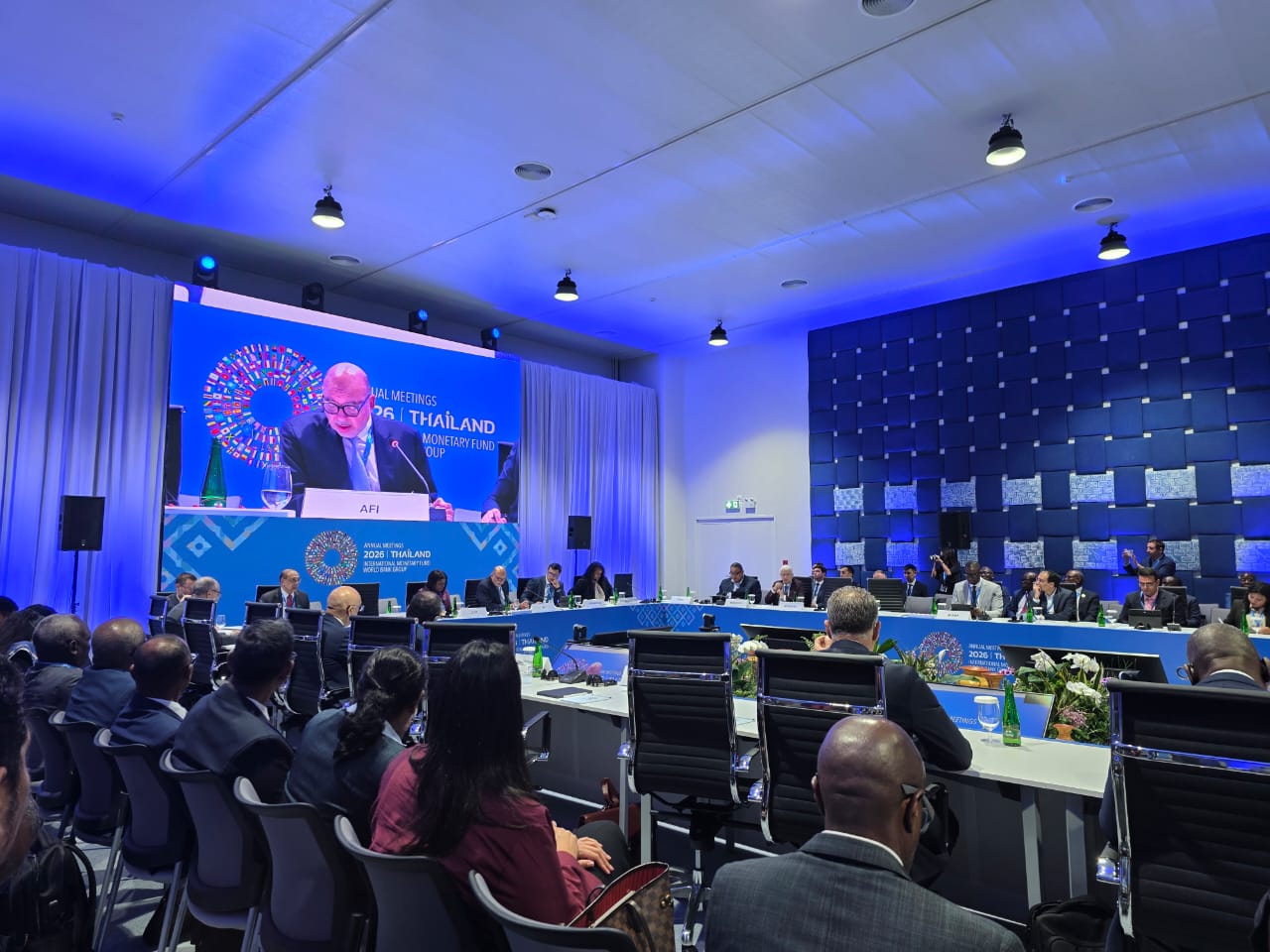
On 13 October, the 18th annual G-24/AFI Policymakers’ Roundtable explored the impact of the rapid growth of crypto assets for emerging markets and developing economies.
The Roundtable, part of the official program of the 2026 IMF and World Bank Group Annual Meetings in Bangkok, brought together leaders from the G-24, AFI, the Financial Action Task Force (FATF), and the Bank for International Settlements Financial Stability Institute (FSI) to discuss how proportionate implementation of crypto asset regulation can balance financial inclusion, integrity, and stability in developing countries.
Stablecoins – crypto assets that are pegged to the US dollar – hold potential for faster and cheaper cross-border payments but often lack consumer protection and contribute to illicit financial flows. If widely held, they could weaken the effectiveness of a central bank’s monetary policy, affect financial stability and impact negatively on financial integrity.
“Stablecoins alone now have a combined market capitalisation of more than 300 billion US dollars,” said AFI CEO Alfred Hannig. “Despite their convenience and affordability, consumer protection for these products is still weak and, in some cases, absent.”
“The question before us is not whether crypto is good or bad,” remarked Governor of the Central Bank of Uzbekistan, Nodirbek Achilov. “It is whether we can design rules under which innovation serves inclusion without importing instability.”
“The core of the global regulatory framework is in place. The next step is implementation, and here the experience of G-24 and AFI members is vital,” added Hannig.
In the opening panel session moderated by G-24 director Dr Iyabo Masha, FATF President Giles Thomson emphasized that countries should focus their efforts where risks are highest, with 65 per cent of countries assessed not yet fully meeting the FATF’s standards for virtual assets.
Governor Larry Howai of the Central Bank of Trinidad and Tobago meanwhile urged central banks to treat stablecoins, not just as a market conduct matter, but also as a monetary policy question.
Central Bank leaders participating in the roundtable reported mixed results on the contribution of crypto assets to financial inclusion. Some suggested evidence of stablecoins enabling cheaper cross-border payments, whilst others saw little impact, classifying main users as active bank account and smartphone owners.
The discussion was anchored in AFI’s ongoing multi-country research program on the complementarity of financial inclusion, financial stability, and monetary policy objectives, implemented in partnerships with the University of Luxembourg and the Florence School of Banking and Finance, with support from Canada’s International Development Research Centre (IDRC).