
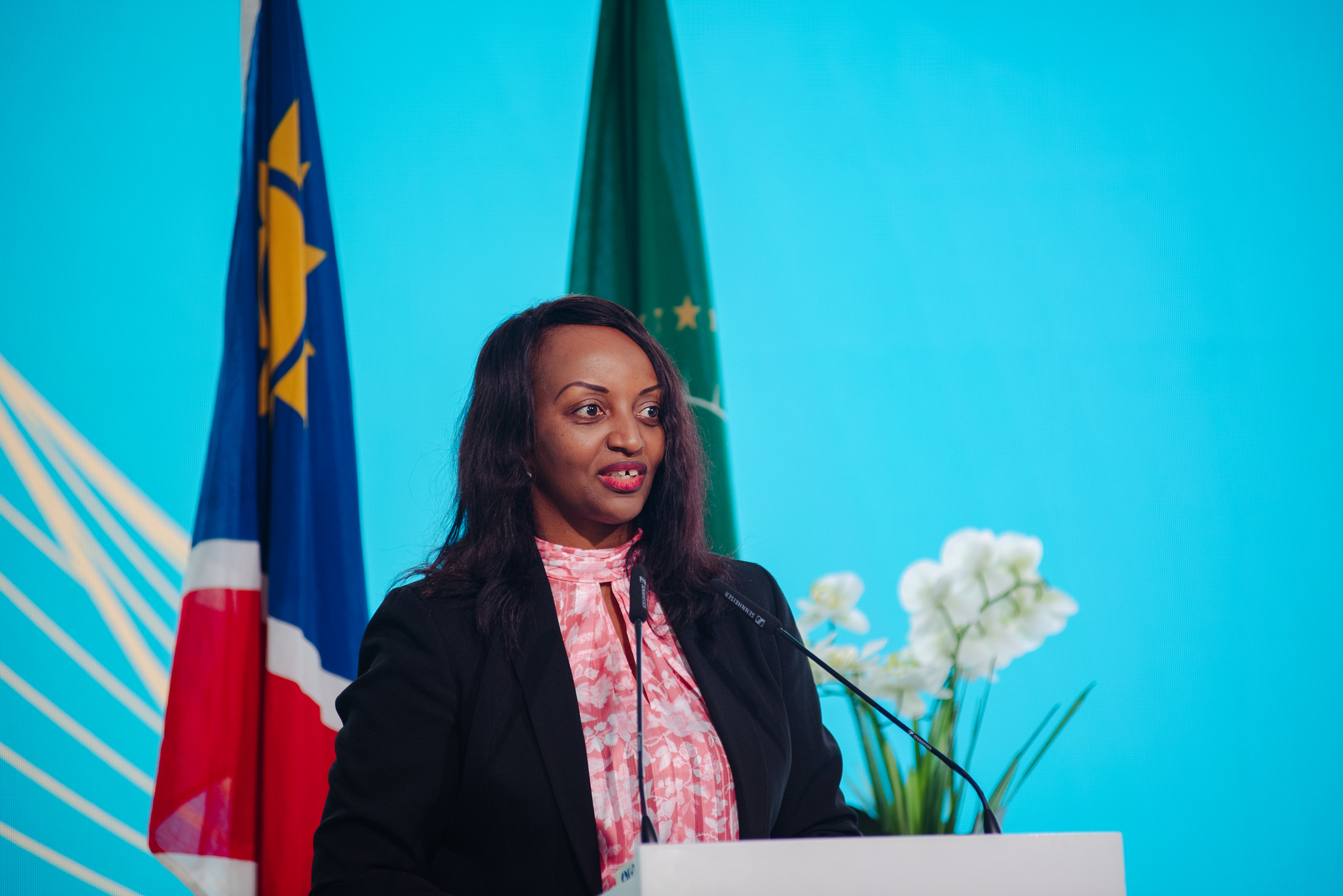
In September 2025, Soraya M. Hakuziyaremye, Governor of the National Bank of Rwanda, was appointed AFI Chair, the first woman to hold the role. During the 2026 GPF in Port Moresby, we discussed the climate for AFI, for financial inclusion, and for female leadership.
From today’s vantage point, how do you reflect on the last twelve months?
They have been intense! In terms of the global context, we are living through unprecedented times. The world has faced crises before, but we’ve seen their intensity and frequency accelerate since the Covid pandemic. We’ve seen high levels of inflation due to the Ukraine war, and now an energy crisis, all against the backdrop of increased natural catastrophes due to climate change.
Shifts in the global order, and climate hazards, affect all countries, and require international cooperation to resolve. In this respect, the AFI network is taking the lead, rather than waiting passively for the situation to improve. The recent endorsement of the Port Moresby Global Compact on Inclusive Green Finance, a global commitment to building climate resilience and supporting the transition to a greener economy, represents an important step in the right direction.
It’s gratifying to see that AFI’s global recognition and influence are stronger than ever. AFI recently secured official observer status with the Financial Action Task Force. We will now be able to ensure that FATF recommendations take the perspectives of developing-world financial regulators into account, while safeguarding financial integrity.
It’s important to emphasize financial inclusion’s ongoing relevance to central banks; its role in promoting inclusive growth and prosperity, and in improving monetary policy transmission. Financial inclusion must remain at the center of what we do.
How does the current context of shrinking development assistance impact AFI?
It forces us to recalibrate our priorities, but also accelerates our transition towards a sustainable future. During the 2026 Global Policy Forum, AFI’s Board endorsed AFI Renovate, a major initiative to secure AFI’s financial independence and long-term sustainability while delivering strong and relevant value to all members. Essentially, this involves mobilizing increased funding from members, allowing them to contribute to AFI’s work, while lessening our reliance on external donors.
An AFI Special Committee on Funding Mobilization has produced a series of recommendations, which we are now sharing with members for their feedback before implementing.
How do you see conversations on financial inclusion evolving?
Throughout the AFI network and beyond, we see increased focus on financial health and resilience. One billion people have been financially included thanks to AFI, but just counting the number of people who own an account or a mobile wallet is not enough. We want to see meaningful usage of financial services, where people are able to save, access to credit, and use digital technology safely. The next stage of financial inclusion will require solving those challenges.
The fundamental shift in access to financial services has been driven by technology. In my country, Rwanda, our formal financial inclusion rate was just 21% in 2008; today, thanks to mobile money, it’s at 92%.
Today, many countries are investing heavily in instant payment systems. When you have digital public infrastructure that allows people to move money at affordable rates, it prompts banks and financial institutions to expand their services. Customers who previously couldn’t access loans because they lacked collateral can now build a transaction history that banks can use to extend credit to them.
In this respect, I’d highlight AFI’s new Consumer Empowerment and Market Conduct Policy Model, which provides helpful guidance on how to strengthen consumer trust, confidence, and participation in digital financial services.
How does it feel to be AFI’s first female Board Chair, and Rwanda’s first female Governor?
The world has always been open to female leaders. It’s just that in certain contexts, women were not given the opportunity to exercise leadership and to sit at decision-making tables.
AFI’s Board is diverse and open, which is how things should be. Still, a lot needs to be done at the national level – out of Africa’s 44 central banks, only three have women governors. Hopefully, many more are coming because we can’t promote financial inclusion while excluding 50% of humanity from the table.
When you’re the first female governor, you’re looked at in a different way. It’s my responsibility to make sure that nobody can say things went wrong because there was a woman at the helm. Ultimately, things can go well or badly regardless of whether it’s a man or woman. Rather than gender, it’s competence that matters – if they have the right skill set and if they’ve been elected by their peers.