
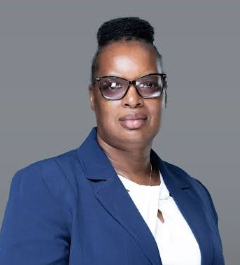
Felicia Dlamini-Kunene, Deputy Governor, Central Bank of Eswatini
Historically, women entrepreneurs in Eswatini have faced multiple barriers to accessing financial services.
Some of these barriers have been cultural and legal. In Eswatini, different marriage regimes determine how matrimonial property is owned and managed. For the longest time, the common-law doctrine of marital power placed married women under the authority of their husbands in matters relating to contracts and matrimonial property.
In practice, this could mean that when a married woman approached a bank to conduct certain transactions, she could be asked about her marital status and, in some instances, be required to obtain her husband’s consent before the transaction could proceed.
In 2019, however, the High Court declared the doctrine unconstitutional, marking an important step towards affirming the dignity, equality and legal autonomy of married women, and bringing them a step closer to greater financial inclusion.
Women also frequently carry significant household and caregiving responsibilities alongside running their businesses. Balancing these demands can make it difficult to devote sufficient time and resources to formalising and growing a business, while access to finance remains a major obstacle. These pressures have further consequences, including difficulties presenting business registration documents or developing a formal business plan.
A recent study conducted by the Central Bank of Eswatini (CBE) in partnership with the Alliance for Financial Inclusion (AFI) confirmed the significant role women play in the economy. Women own approximately 60% of MSMEs in the country. However, challenges remain: approximately 74% of women-led entities identify access to finance as a major constraint, while only about 10% of MSMEs are able to secure formal financing.
As a result, women who are unable to access formal financial services may be forced to abandon their projects or turn to expensive or unsuitable alternative sources of finance.
Why financial inclusion matters for central banks
A central bank works to ensure price and financial stability, notably through monetary policy. When a significant portion of the population is excluded from the financial system, the effectiveness of the monetary policy transmission mechanism is constrained. Simply put, it becomes more difficult for monetary policy measures to gain traction across the economy.
Secondly, access to finance provides people with an opportunity to build wealth, whether through financing a small business, saving or investing. Financial inclusion also helps mitigate risk by giving people access to safe and reputable systems to save and manage their money, rather than relying on cash.
At the CBE, financial inclusion is part of who we are. It is central to our mandate and supports the effectiveness of our policies.
We requested banks to offer low-cost, no-frills accounts and supported agent banking to bring services closer to underserved communities. This thinking underpins the Central Bank’s devotion to designing banking products that are inclusive and, most importantly, address the needs of women and girls.
The CBE is working with local commercial banks to develop products tailored to the needs of women and girls – products that will allow them to start their financial journeys early, grow with them, and support their financial ambitions as they evolve.
Building the structure for women’s financial inclusion
Four decades ago, the government entrusted the Central Bank with establishing and overseeing the Small-Scale Enterprise Loan Guarantee Scheme (SSELGS) and the Export Credit Guarantee Scheme (ECGS). These initiatives facilitate access to finance for businesses, including Women-led MSMEs.
Together with our sister regulator, the Centre for Financial Inclusion, we developed a national framework for financial inclusion. Today, the Central Bank has a dedicated unit responsible for gender-oriented financial inclusion and development finance. The unit coordinates activities and engages with key stakeholders, including banks and non-governmental organisations.
We are working on several initiatives with the banking sector, including gender-sensitive financial product design and gender-inclusive policies across the sector.
At the CBE we believe that innovation must contribute to improving women’s financial health. Success should not simply be measured by an increase in the number of bank accounts opened or loans issued. A useful financial product should help a woman save, manage payments or invest in her livelihood. Credit should enable her to grow her business or recover from a setback instead of leaving her indebted or vulnerable.
Women’s financial autonomy is another critical priority. The UNDP has reported that 48.2% of women in Eswatini have experienced physical or sexual violence in their lifetime. A woman facing abuse may need a safe place to keep her money and the ability to pay for necessities such as transport or accommodation.
A bank account alone cannot save someone from an abusive situation. Safety requires protection, trusted support services and access to justice. However, appropriate financial services can play an important role in protecting a woman’s privacy and giving her greater control over her financial resources.
Women’s financial inclusion as an economic driver
Women account for about 60% of our population. By excluding them from the financial system, we compromise the country’s economic potential.
We know that investing in women creates benefits that extend beyond the individual. Women’s economic participation can support the health, education and well-being of entire households.
Economic growth depends on small businesses. By embracing women-owned businesses, we boost GDP and create the conditions for inclusive economic growth. This must be a priority for every central bank.